
Review platforms matter for AI search because they provide structured, comparative, third-party data at volume which is close to ideal input for a system deciding which vendor to recommend.
A model answering “what’s the best tool for X” needs to weigh options against each other using sources it can attribute. G2, Capterra and TrustRadius provide exactly that: star ratings, feature comparisons, segmentation by company size, and written assessments from people with no commercial stake in the answer.
The old rationale for review platforms was trust signals and some referral traffic. Worth doing, rarely urgent.
The current rationale is different. Review presence has become an input to whether you get recommended at all, not just whether you look credible after someone finds you.
What Changed?
Review platforms shifted from being a destination buyers visit to being a source AI systems read.
Both roles still exist. Buyers still browse G2 directly. But the second role is newer, larger in effect, and invisible in your analytics.
The old model: A buyer searches, finds your G2 listing, reads reviews, clicks through to your site. You see referral traffic. You can measure it.
The current model: A buyer asks an AI which tool to use. The model consults review platform data among other sources. It names three vendors. The buyer searches those names directly.
In the second version, your review presence influenced whether you were named and you see no referral traffic from G2 at all, because the buyer never visited it.
This is why review platform ROI is systematically underestimated. The measurable channel shrank while the actual influence grew.
Does Review Volume Or Recency Matter More?
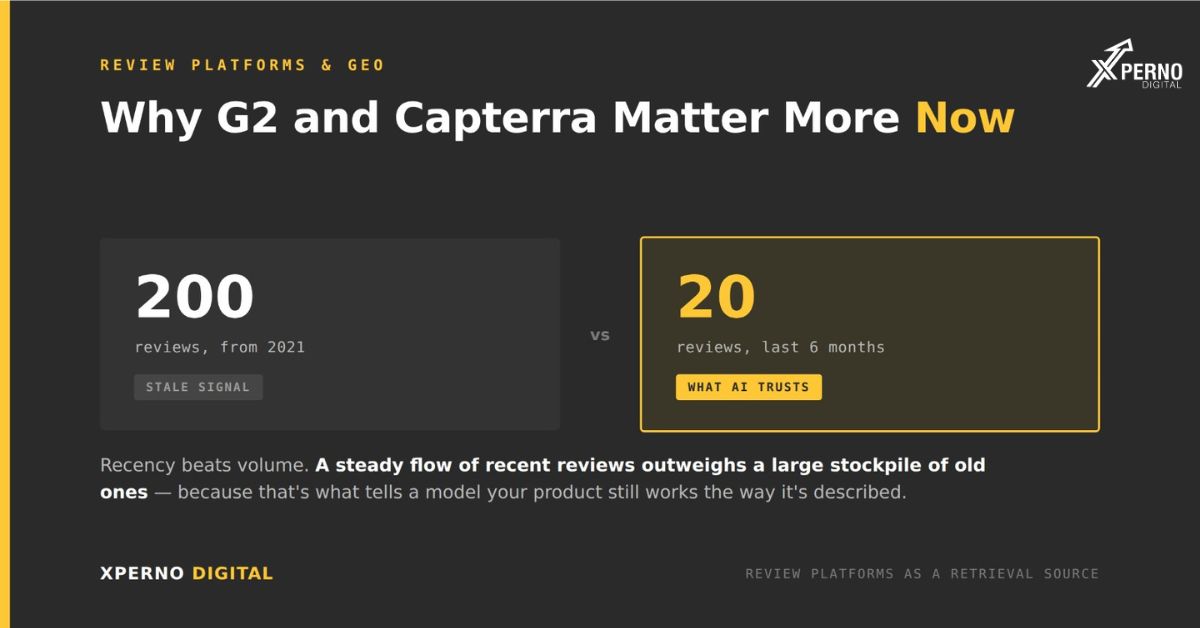
Recency appears to matter more than total volume. Twenty reviews from the last six months carries more weight than two hundred from four years ago.
The reasoning is straightforward: Software changes. A review from 2021 describes a product that may no longer exist in that form. A system assessing current suitability has reason to weight recent assessments more heavily.
Recency also signals something about the company: A review profile that stopped in 2022 suggests a product that may have stopped too declining usage, a company in trouble, or a team that no longer asks. None of those are impressions you want forming.
The practical target: A steady flow rather than campaigns. Five to ten new reviews per month, sustained, beats a hundred in one quarter followed by two years of silence. Steady flow also looks more organic, which matters for platform trust and for how the data reads.
Which Platforms Should You Be On?
Two platforms, done properly, beats five done thinly:
G2: The most influential for B2B software generally. Widest category coverage, most frequently cited, strongest brand recognition among buyers.
Capterra / Get App / Software Advice: All Gartner-owned, sharing much of the same review pool. A presence on one gives partial presence across the others.
Trust Radius: Smaller but reviews are longer and more detailed, which makes them useful source material.
Category-specific platforms: Often overlooked and frequently more valuable in niche categories. A vertical-specific review site with 40 reviews in your exact space may carry more weight in your category’s answers than a general platform with 400 across everything.
How to choose? : Run your buyer prompts in Perplexity and look at which review platforms it actually cites in your category. That answers the question directly, in ten minutes, for your specific market rather than in general.
How Do You Build Review Presence?
Ask systematically at the moments customers are most satisfied, rather than running periodic campaigns.
The Four Moments That Work:
1. After successful onboarding: The customer has just experienced the thing working. Satisfaction is highest and the memory is fresh.
2. After a resolved support ticket: Counterintuitive, but a well-handled problem produces stronger goodwill than no problem at all.
3. After a milestone in-product: They hit a usage threshold, completed a project, saw a result.
4. At renewal: They have just decided you are worth paying for again.
Automate the ask: Most support and CS platforms can trigger a request based on these events. A manual quarterly campaign will not survive contact with a busy quarter.
Make it easy: Direct link to the review form, not to the platform homepage. Every additional click loses a meaningful share.
Do not incentivise inappropriately: Platforms have rules about this, and violations get reviews removed. Small tokens of appreciation are generally permitted where disclosed; payment tied to positive sentiment is not.
Ask everyone, not only happy customers: Selective solicitation is against most platform policies, detectable in the rating distribution, and a profile of exclusively five-star reviews reads as manufactured. A 4.4 average with some critical reviews is more credible than a 4.9 with none to buyers and to systems weighing sources.
What About Negative Reviews?
Respond to every negative review, publicly, with specifics. This does more for credibility than the review costs you.
A profile with no criticism is not believable. Buyers know every product has limitations and a page that shows none reads as filtered.
What a good response contains?
- Acknowledgement of the specific issue, not a generic apology
- What is being done about it, or an honest statement that it is not on the roadmap
- No defensiveness, no explaining why the customer was wrong
Why this matters beyond the individual review?: responses are part of the crawlable content. A model reading your listing sees not just the criticism but how the company handles it. That is a signal about the company that no marketing copy can provide.
Do Paid Tiers Help?
Paid tiers affect placement on the platform itself, not citation likelihood. Get the reviews first.
G2 and Capterra sell sponsored placement, category positioning and lead access. These influence what a buyer sees when browsing the platform directly.
They do not directly change how likely a system is to cite you, because that depends on the review data itself volume, recency, ratings, written content rather than your commercial relationship with the platform.
A reasonable sequence: Build genuine review presence first, evaluate whether direct platform traffic justifies paid placement second. A company paying for prominence on a listing with eleven reviews from 2022 has the order wrong.
How To Measure Whether It Is Working :
Track review velocity and check whether platforms appear in AI citations for your category.
- Review velocity: New reviews per month, per platform. This is the input metric and the one you control.
- Citation presence: Run your buyer prompts in Perplexity monthly. Note whether review platforms appear in the cited sources and whether your listing specifically is among them.
- Rating distribution: Watch the shape, not just the average. A healthy profile has a spread. A profile that is entirely five stars invites scepticism.
- What not to expect: Direct referral traffic from review platforms to correlate with AI visibility gains. The mechanism runs through the model, not through a click, so the traffic number will understate the effect considerably .
Frequently Asked Questions:
How many reviews do I need before it matters?
There is no threshold, but consistent recent activity matters more than a specific count. Ten reviews in the last six months does more than fifty from three years ago.
Can I ask customers to leave positive reviews?
You can ask customers to leave reviews. Asking specifically for positive ones, or filtering who you ask by expected sentiment, violates most platform policies and produces a distribution that reads as manufactured.
Should I respond to every review?
Respond to every negative and neutral one. Positive ones are optional, though responding shows engagement.
Do review platforms help traditional SEO?
Somewhat they rank well for category and comparison terms, and being present on a page that ranks gives you visibility. The larger effect now is as a retrieval source.
Which single platform matters most?
G2 for B2B software generally, but check what Perplexity cites in your specific category. Vertical platforms sometimes outweigh general ones in niche markets.
How long before review presence affects AI visibility?
Four to six months. Reviews need to accumulate, be indexed, and shift the aggregate picture. This is the slowest component of GEO and the one most companies skip.